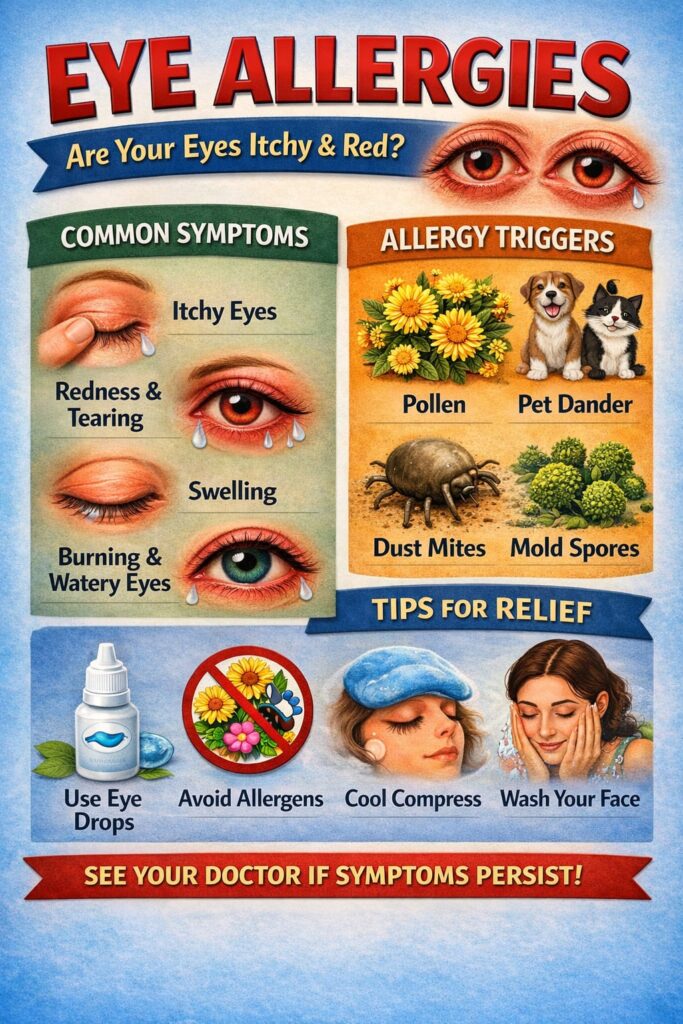
Eye allergies are a common problem, especially in cities with dust and pollution. They can cause redness, itching, and discomfort, affecting daily life. Understanding causes and treatment can help manage symptoms effectively.
What Are Eye Allergies?
Eye allergies (allergic conjunctivitis) occur when the eyes react to allergens like dust, pollen, or smoke.
Common Causes of Eye Allergies
Dust and pollution
Pollen (seasonal allergies)
Pet dander
Smoke
Cosmetics or eye products
Symptoms of Eye Allergies
Itching (most common symptom)
Redness
Watering
Burning sensation
Swelling of eyelids
Sensitivity to light
Types of Eye Allergies
Seasonal Allergic Conjunctivitis – occurs during pollen seasons
Vernal Keratoconjunctivitis – more severe, common in children.
Contact Allergies – due to lenses or cosmetics
Treatment Options
Avoid Allergens
Stay away from dust and smoke
Use sunglasses outdoors
Cold Compress
Helps reduce itching and swelling.
Lubricating Eye Drops
Provide relief by washing out allergens.
Anti-Allergic Eye Drops
Prescribed medications help control symptoms effectively.
Avoid Rubbing Eyes
Rubbing worsens symptoms and may damage the cornea.
When to See an Eye Doctor
Severe redness or pain
Blurred vision
Symptoms not improving
Frequent recurrence
Best Preventive Tips
Wash eyes with clean water
Maintain hygiene
Limit screen time
Eat foods rich in Vitamin A & Omega-3
Frequently Asked Questions
Q1. Are eye allergies contagious?
No, they are not infectious.
Q2. Can eye allergies damage vision?
Usually no, but severe cases may affect the cornea.
Q3. Can I use eye drops without prescription?
Avoid self-medication; consult an eye specialist.
Conclusion
Eye allergies may seem minor but can significantly affect comfort and productivity. Early treatment and proper care can keep your eyes healthy and irritation-free.