Diwali Eye Safety: How to Protect Your Eyes from Firecracker Injuries
anushka
2 November 2026
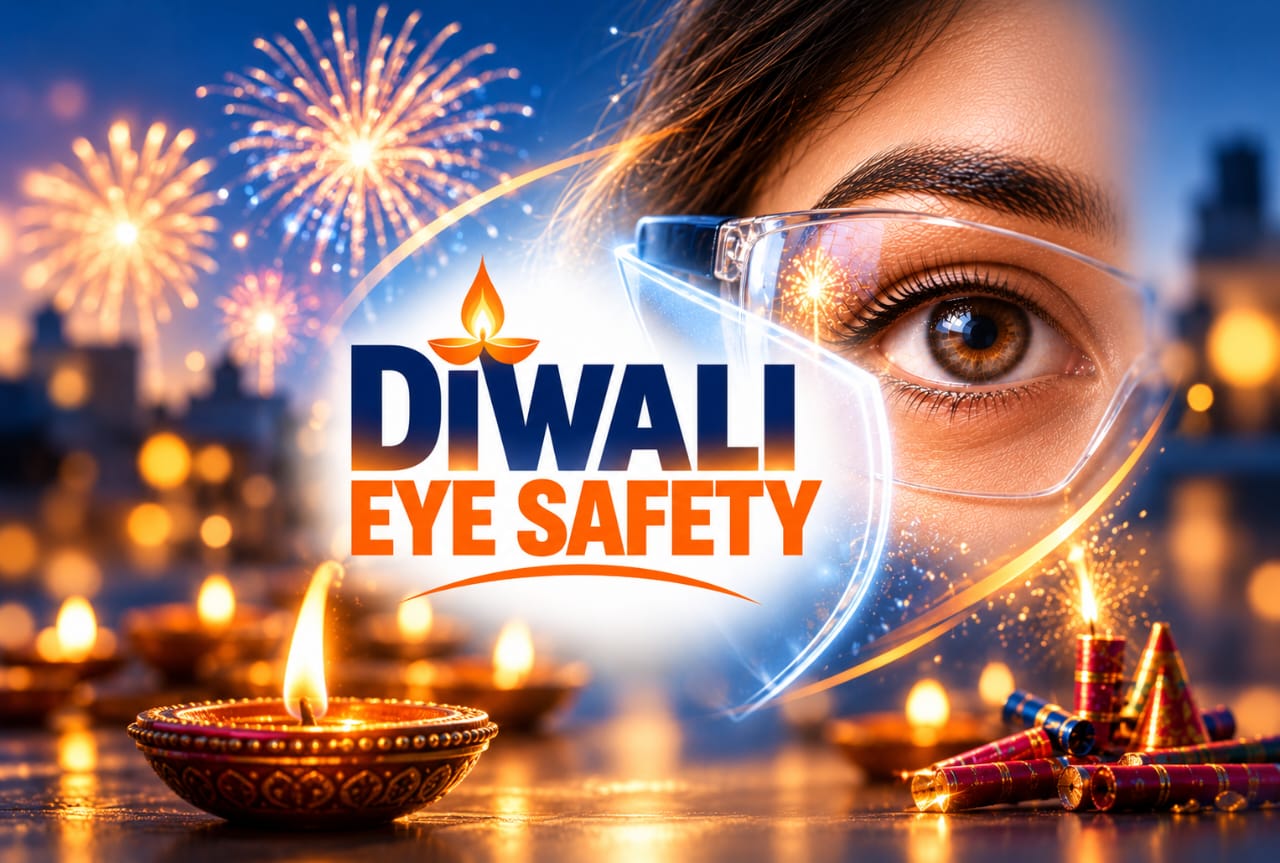
Diwali is about light, family and celebration. But every year, eye hospitals across India see the same pattern: patients arriving after a firecracker burst too close, many of them children, and many of them not even the person who lit it.
The good news is that most of these injuries are preventable. This guide explains how firecrackers harm the eyes, who is most at risk, what to do in the first few minutes after an injury, and which symptoms mean you should go to an eye hospital immediately.
Key takeaways
- Eye injuries make up roughly one in five firecracker injuries reported in Indian hospital studies.
- Bystanders are often hurt as much as the people lighting the firecrackers. Several Indian studies report that more than half of injured patients were bystanders.
- Ordinary spectacles and sunglasses are not protective eyewear.
- Never rub, press or rinse an eye that may have a penetrating injury. Cover it loosely and get to an ophthalmologist immediately.
- Do not wait until morning. Delays in treatment can cost vision.
How common are firecracker eye injuries during Diwali?
Firecracker eye trauma is a well-documented seasonal problem in Indian ophthalmology. Some of what hospital studies have found:
- Bystanders are at real risk. A study of Diwali injuries at a North Indian tertiary eye centre found that 55.5% of injured patients were bystanders. A New Delhi study from the 2017 Diwali period found that 58.8% of injuries happened to people who were nearby but not lighting anything.
- Many injuries are serious. In the North Indian series, about one in three injured eyes needed surgery, and around 9% had an open-globe injury, where the wall of the eyeball is breached.
- Children and teenagers are commonly affected. A South Indian study reported a median patient age of 14 years.
- Regulation appears to help. A six-year analysis from a Delhi hospital found that firecracker eye injuries fell by more than half in the years after firecracker regulations were introduced.
- Delays are common. In the same Delhi analysis, only about a quarter of patients reached hospital within 24 hours of injury.
A note on interpreting these numbers: they come from patients treated at specific hospitals, so they cannot be used to calculate a nationwide injury rate. They are, however, consistent in showing that injuries are frequent, often severe, and often affect people who were not handling the firecracker.
How do firecrackers injure the eye?
The type and severity of injury depend on how close the person was, the kind of firecracker, and the force released.
- Blast and impact injuries. A bursting firecracker releases fast-moving fragments and a pressure wave. These can damage the eyelids, cornea and conjunctiva, and also structures deep inside the eye. An eye can look fairly normal on the outside while bleeding or tissue damage is happening within.
- Burns. Sparks and hot particles can burn the eyelids, lashes and the surface of the eye, causing redness, swelling, blistering or damage to the cornea’s outer layer.
- Foreign bodies. Tiny particles can lodge on the cornea or under the eyelid, causing a gritty feeling, watering, pain and light sensitivity. Rubbing makes it worse and can scratch the cornea.
- Chemical and smoke irritation. Residue and smoke can sting and inflame the eye surface. This is usually temporary, but a true chemical splash is an emergency (see first aid below).
Which parts of the eye can be damaged?
Part of the eye | What can happen | Possible symptoms |
Cornea (clear front surface) | Scratches, burns, deep cuts, scarring | Pain, watering, blurred vision, light sensitivity |
Conjunctiva (membrane over the white of the eye) | Irritation, swelling, bleeding under the surface | Redness, a bright red patch on the white of the eye |
Eyelids | Burns, cuts, bruising | Swelling, difficulty closing the eye fully |
Iris and front chamber | Bleeding inside the eye (hyphema) | Blood visible in the eye, pain, blurred vision |
Lens | Damage that can lead to traumatic cataract | Cloudy or reduced vision |
Retina and optic nerve | Severe injury from blunt or penetrating trauma | Flashes, floaters, a shadow over vision, lasting vision loss |
Not every injury affects every structure, which is exactly why a proper eye examination matters after any significant trauma.
Who is most at risk?
- Children, who struggle to judge distance and react quickly when a firecracker misbehaves.
- Bystanders and spectators, who are in range of debris but not expecting it.
- People lighting firecrackers, who face the highest exposure to sparks and blast energy.
- People who wear glasses or contact lenses. Prescription spectacles are not impact-rated safety eyewear and should not be treated as protection.
- Older adults and people with existing eye conditions, who should be examined promptly after any trauma or sudden change in vision.
Smoke, pollution and eye irritation
Firecrackers add fine particles and gases to the air, which can aggravate dry eye and allergic conjunctivitis. Common symptoms include burning, stinging, redness, watering, itching and a gritty feeling.
To reduce irritation: stay away from heavy smoke, move to cleaner air if your eyes start to sting, avoid rubbing, and follow your ophthalmologist’s advice if you have a chronic eye condition.
Important: persistent pain, strong light sensitivity or blurred vision should not be blamed on pollution. These can signal a real injury that needs examination.
7 simple ways to protect your eyes this Diwali
- Keep your distance. Watch from a safe distance and follow the instructions on the product. Never hold a firecracker near your face.
- Wear proper protective eyewear where fireworks are permitted. Choose certified, impact-rated safety goggles, not sunglasses or regular spectacles.
- Supervise children closely. Children should never light or handle fireworks on their own.
- Never go back to a dud. Do not relight, pick up or inspect a firecracker that failed to go off. Keep others away from it.
- Don’t rub your eyes. Rubbing turns a small scratch into a bigger one.
- Limit smoke exposure. Choose a well-ventilated spot, especially if you have dry eyes or allergies.
- Keep hands clean. If you wear contact lenses, avoid touching your eyes with unwashed hands and remove lenses if your eyes become irritated.
First aid for firecracker eye injuries
The golden rule: do nothing that could make the injury worse.
Situation | Do | Don’t |
Dust or small particle, mild discomfort | Rinse gently with clean water or sterile saline. See a doctor if pain, redness or blurred vision continues. | Don’t rub. Don’t try to remove anything with fingers, cotton buds or tweezers. |
Smoke or mild irritation | Move away from the smoke. Rinse gently with clean water or saline. | Don’t rub. Don’t assume persistent symptoms are just smoke. |
Chemical splash or suspected chemical burn | Start flushing straight away with plenty of clean, lukewarm running water or saline. Continue for at least 20 minutes while arranging emergency care. | Don’t waste time looking for a special solution. Plain clean water is better than delay. |
Burn from a spark | Get urgent medical assessment, especially if the eyelids or eye surface look damaged. | Don’t apply ice to the eyeball, or any creams, ointments, home remedies or unprescribed eye drops. |
Suspected penetrating injury or severe blow | Protect the eye from contact without pressure (for example, a rigid shield or the base of a paper cup taped around the eye) and go to emergency eye care immediately. | Don’t press, rub or rinse the eye. Don’t try to remove an embedded object. |
Warning signs: go to an eye hospital immediately
Some serious injuries look mild at first. Seek urgent care if you notice any of these after a firecracker incident:
- Sudden reduced vision or loss of vision
- Severe eye pain or strong sensitivity to light
- Blood inside the eye or heavy bleeding
- A pupil that looks irregular or misshapen
- A visible cut, puncture or an object stuck in the eye
- New flashes of light, floaters, or a curtain-like shadow
- Marked swelling after a blast or direct blow
- Blurred vision that does not clear
Do not wait until the next morning. Some damage cannot be seen without specialist equipment, and early treatment gives the best chance of protecting vision.
What happens at the eye hospital?
An ophthalmologist will first work out how severe the injury is. The examination may include a vision test, a pupil check, a slit-lamp examination (a microscope with a bright light), and fluorescein dye to reveal scratches on the cornea. Depending on the case, the doctor may also measure eye pressure, examine the retina after dilating the pupil, or order imaging if there is concern about an object inside the eye.
If an open-globe injury is suspected, the doctor will avoid any pressure on the eye. Minor surface injuries may need medication and follow-up. Deeper injuries may need surgery.
Outcomes vary with the type of injury and how quickly care begins. Recovery can never be guaranteed, which is why prevention and early assessment matter so much.
Frequently asked questions
Can sunglasses or my regular glasses protect me from firecrackers? No. They are not designed to resist impact or blast debris. Use certified, impact-rated protective eyewear if you are handling fireworks where they are permitted.
Can I get an eye injury without lighting a firecracker? Yes. Hospital studies from India repeatedly find that a large share of injured patients, often more than half, were bystanders.
What should I do if something gets in my eye after a firecracker? Don’t rub. Rinse gently with clean water or saline. If pain, redness or blurred vision persists, or if you suspect something has penetrated the eye, see an ophthalmologist immediately.
Should I put eye drops or ointment on an injured eye? Not unless a doctor has prescribed them. Unprescribed drops, creams and home remedies can make an injury worse or hide symptoms.
Is it safe to wait for the pain to settle? No. If there was a blast, burn or direct impact, or your vision has changed, get examined the same day.
Conclusion
Diwali should be remembered for its lights, sweets and togetherness, not for an emergency visit to the eye hospital. A few habits make the difference: keep your distance, protect your eyes with proper eyewear, watch children closely, never touch a dud, and treat any eye injury as urgent.
If you or someone near you is hurt, don’t judge the injury by how the eye looks. Get it checked.
Medical disclaimer: This article is for general health education and does not replace a clinical examination or personalised medical advice. A suspected serious eye injury needs urgent professional assessment.