When Eye Strain Signals a Bigger Problem: Understanding Glare, Headaches, and Fatigue
anushka
10 August 2026
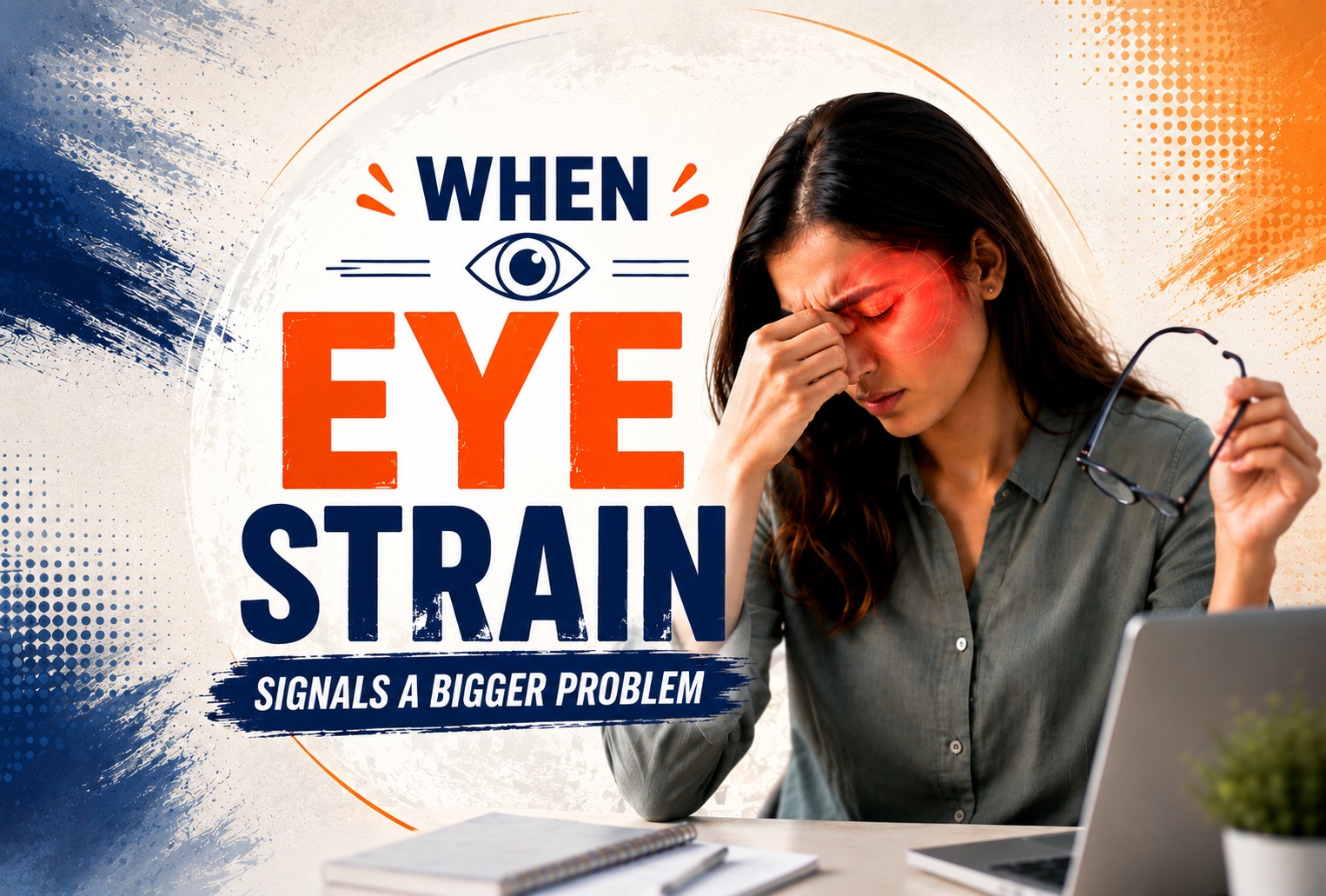
Most people experience eye strain at some point in their lives. After a long day working on a computer, reading for hours, driving at night, or scrolling through a smartphone, it’s common to feel tired eyes, mild headaches, or temporary blurred vision.
However, what many people don’t realize is that persistent eye strain is not always just a result of overusing digital devices. In some cases, recurring symptoms such as glare sensitivity, headaches, eye fatigue, and difficulty focusing may signal an underlying eye condition that requires professional evaluation.
Ignoring these warning signs can lead to worsening symptoms and delayed diagnosis of potentially serious problems. Understanding the difference between ordinary eye strain and symptoms that suggest a bigger issue can help protect your vision and overall well-being.
In this article, we explore the causes of eye strain, associated symptoms, warning signs, and when it is time to consult an eye specialist.
What Is Eye Strain?
Eye strain, also known as asthenopia, occurs when the eyes become tired from prolonged visual activities.
Common triggers include:
- Extended computer use
- Reading for long periods
- Driving long distances
- Smartphone usage
- Poor lighting conditions
- Uncorrected vision problems
Eye strain itself is usually not dangerous, but frequent or persistent symptoms may indicate an underlying issue.
Common Symptoms of Eye Strain
People experiencing eye strain may notice:
- Tired eyes
- Eye discomfort
- Burning sensation
- Dry eyes
- Watering eyes
- Blurred vision
- Difficulty focusing
- Headaches
- Sensitivity to light
- Neck and shoulder pain
These symptoms often improve with rest but may persist if an underlying condition exists.
Why Do Our Eyes Become Strained?
The muscles responsible for focusing work continuously when viewing nearby objects.
Activities such as:
- Computer work
- Reading
- Mobile phone use
- Gaming
require sustained focus.
Over time, the focusing muscles can become fatigued, leading to discomfort and visual symptoms.
Additionally, reduced blinking during screen use contributes to dry eyes and irritation.
Understanding Glare: More Than Just Bright Lights
Glare occurs when excessive light interferes with vision.
Many people assume glare is simply annoying, but persistent glare sensitivity may indicate a more significant eye problem.
Types of Glare
Disability Glare
This reduces visual performance and makes it difficult to see clearly.
Examples include:
- Headlights while driving at night
- Bright sunlight
- Reflective surfaces
Discomfort Glare
This causes visual discomfort without necessarily reducing vision.
Examples include:
- Bright office lighting
- Computer screens
- LED lights
When Glare May Signal a Bigger Problem
Persistent glare sensitivity may be associated with:
Cataracts
One of the most common causes of glare.
Symptoms include:
- Halos around lights
- Difficulty driving at night
- Blurred vision
- Increased sensitivity to headlights
As cataracts progress, glare often becomes more noticeable.
Corneal Problems
Conditions affecting the cornea may scatter incoming light and increase glare.
Examples include:
- Keratoconus
- Corneal scars
- Corneal infections
Dry Eye Disease
An unstable tear film causes irregular light refraction.
Patients may experience:
- Fluctuating vision
- Glare
- Burning sensation
- Foreign body sensation
Refractive Errors
Uncorrected vision problems such as:
- Nearsightedness (Myopia)
- Farsightedness (Hyperopia)
- Astigmatism
can contribute to glare and eye strain.
Why Headaches May Be Related to Eye Problems
Not all headaches originate from the eyes, but many eye conditions can trigger headaches.
Uncorrected Refractive Errors
The eyes constantly attempt to focus when a prescription is inadequate.
This extra effort may result in:
- Forehead pain
- Eye discomfort
- Fatigue
- Difficulty concentrating
Astigmatism
Astigmatism causes distorted vision due to irregular corneal curvature.
Common symptoms include:
- Headaches
- Eye strain
- Blurred vision
- Difficulty seeing at night
Presbyopia
Presbyopia is an age-related loss of near focusing ability.
Patients often experience:
- Reading difficulty
- Eye strain
- Headaches after close work
Usually develops after age 40.
Binocular Vision Problems
Both eyes must work together effectively for comfortable vision.
Poor eye coordination may cause:
- Headaches
- Double vision
- Reading difficulties
- Fatigue
Understanding Eye Fatigue
Eye fatigue occurs when the visual system becomes overwhelmed by prolonged effort.
Digital Eye Strain
One of the most common modern causes of eye fatigue.
Contributing factors include:
- Long screen hours
- Reduced blinking
- Improper monitor position
- Poor lighting
Symptoms often worsen toward the end of the day.
Poor Sleep Quality
Sleep deprivation affects visual performance.
Symptoms may include:
- Dry eyes
- Blurred vision
- Heavy eyelids
- Increased eye fatigue
Adults generally require 7–9 hours of sleep each night.
Stress and Mental Fatigue
Emotional stress can worsen symptoms of eye strain and headaches.
Chronic stress may lead to:
- Increased muscle tension
- Difficulty focusing
- Visual discomfort
Warning Signs That Eye Strain May Indicate a Serious Problem
Occasional eye strain is common.
However, certain symptoms should never be ignored.
Persistent Blurred Vision
Blurred vision that does not improve with rest may indicate:
- Cataracts
- Glaucoma
- Retinal disease
- Refractive errors
Sudden Vision Changes
Seek immediate medical attention if you experience:
- Sudden vision loss
- Flashes of light
- New floaters
- Distorted vision
These symptoms may indicate serious retinal problems.
Severe Headaches With Eye Symptoms
Headaches accompanied by:
- Eye pain
- Nausea
- Redness
- Halos around lights
may indicate acute angle-closure glaucoma, a medical emergency.
Eye Pain
Persistent pain is not typical of simple eye strain.
Possible causes include:
- Corneal injury
- Infection
- Inflammation
- Glaucoma
Double Vision
Double vision should always be evaluated promptly.
Potential causes range from eye muscle disorders to neurological conditions.
Eye Conditions That Can Mimic Eye Strain
Several diseases initially present with symptoms similar to routine eye fatigue.
Cataracts
Symptoms:
- Glare
- Blurred vision
- Night driving difficulty
- Frequent prescription changes
Glaucoma
Symptoms may include:
- Peripheral vision loss
- Headaches
- Eye pressure sensation
Early glaucoma often develops without obvious symptoms.
Dry Eye Disease
One of the most commonly overlooked causes of eye discomfort.
Symptoms include:
- Burning
- Watering
- Glare
- Blurred vision
Macular Degeneration
May cause:
- Distorted central vision
- Reading difficulty
- Visual fatigue
Keratoconus
A progressive corneal disorder causing:
- Blurred vision
- Glare
- Frequent spectacle changes
How Eye Specialists Diagnose the Cause
A comprehensive eye examination may include:
Vision Testing
Measures visual acuity and refractive errors.
Refraction Assessment
Determines whether glasses or contact lens correction is needed.
Eye Pressure Measurement
Helps screen for glaucoma.
Corneal Evaluation
Examines the front surface of the eye.
Retinal Examination
Assesses retinal and macular health.
OCT Imaging
Provides detailed retinal and optic nerve scans.
Tips to Reduce Eye Strain
Even when no serious disease is present, healthy habits can reduce symptoms.
Follow the 20-20-20 rule.
Every 20 minutes:
- Look 20 feet away
- For 20 seconds
This relaxes focusing muscles.
Blink Frequently
Blinking helps maintain tear film stability and eye comfort.
Optimize Screen Position
Keep screens:
- At arm’s length
- Slightly below eye level
Improve Lighting
Avoid excessive glare from windows and overhead lights.
Stay Hydrated
Proper hydration supports healthy tear production.
Wear Updated Glasses
Outdated prescriptions can worsen eye strain significantly.
When Should You See an Eye Doctor?
Schedule an eye examination if you experience:
- Frequent headaches
- Persistent eye strain
- Glare sensitivity
- Difficulty driving at night
- Blurred vision
- Eye pain
- Double vision
- Sudden visual changes
Early diagnosis often leads to better treatment outcomes.
Frequently Asked Questions
Can eye strain permanently damage vision?
Eye strain itself usually does not cause permanent damage, but underlying conditions may worsen if left untreated.
Why do I get headaches after using a computer?
Digital eye strain, uncorrected refractive errors, and poor ergonomics are common causes.
Is glare a sign of cataracts?
Yes. Increased glare sensitivity is one of the most common symptoms of cataracts.
Can dry eyes cause headaches?
Dry eyes can contribute to eye discomfort and fatigue, which may trigger headaches in some individuals.
Should I worry about persistent eye fatigue?
Yes. Persistent symptoms should be evaluated by an eye specialist to rule out underlying conditions.
Conclusion
Eye strain is often dismissed as a minor inconvenience, but recurring symptoms such as glare sensitivity, headaches, blurred vision, and fatigue may indicate a more serious underlying eye problem.
Conditions such as cataracts, glaucoma, dry eye disease, keratoconus, and retinal disorders can initially appear similar to ordinary eye strain. Recognizing warning signs and seeking professional evaluation can lead to earlier diagnosis and better outcomes.
Your eyes work hard every day. Listening to what they are telling you could help preserve your vision for years to come.
About Anushka Eye Hospital
At Anushka Super Speciality Eye Hospital, Bhiwandi, we provide comprehensive eye examinations, advanced cataract screening, glaucoma evaluation, dry eye assessment, OCT imaging, retina services, and personalized treatment plans for patients experiencing visual discomfort.
If you are experiencing persistent eye strain, headaches, glare, or blurred vision, our experienced eye specialists can help identify the cause and recommend appropriate treatment.
Book your eye check-up today and protect your vision with expert care.