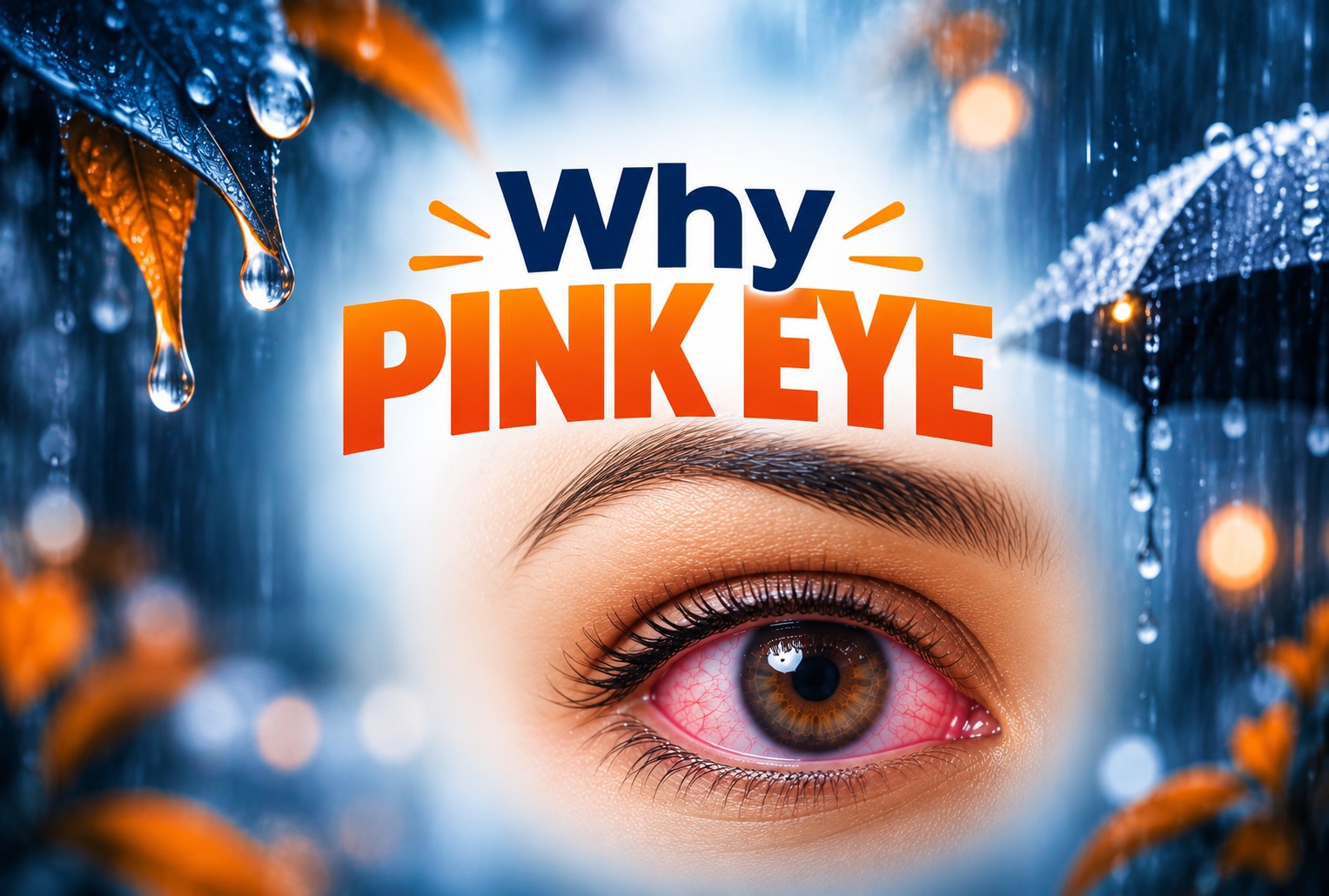
Why Pink Eye Becomes More Common During the Rainy Season
anushka
12 September 2026
Eye Health
Have you noticed more people around you developing red, watery or sticky eyes during the monsoon? The rainy season can create conditions that make the spread of certain eye infections easier.
One of the most commonly discussed conditions is pink eye, medically known as conjunctivitis.
What Is Pink Eye?
Conjunctivitis is inflammation of the conjunctiva, the thin transparent membrane covering the white part of the eye and the inner surface of the eyelids.
It can be caused by viruses, bacteria, allergies or irritation.
Infectious conjunctivitis can spread easily from person to person, particularly in crowded environments.
Why Can It Spread During Monsoon?
The monsoon brings increased humidity, water accumulation and closer contact in indoor spaces. Poor hand hygiene and touching the eyes can also contribute to the spread of infectious conjunctivitis.
The infection can spread through contaminated hands and objects that come into contact with the eyes.
Common Symptoms
Pink eye may cause:
• Redness of the eye • Watering • Itching • Swelling of the eyelids • Sticky or mucus-like discharge • Gritty or foreign-body sensation • Mild discomfort • Increased sensitivity to light in some cases
Symptoms can affect one or both eyes.
Is Every Red Eye Conjunctivitis?
No.
A red eye can have many causes, including dry eye, allergy, corneal infection, inflammation inside the eye, glaucoma and other conditions.
This is why it is not advisable to assume that every red eye is simply “pink eye.”
How Can You Prevent the Spread?
Wash Your Hands Regular handwashing is one of the simplest ways to reduce the spread of infectious eye conditions.
Avoid Touching Your Eyes Try not to rub or touch your eyes unnecessarily.
Don’t Share Personal Items Avoid sharing towels, handkerchiefs, pillows, cosmetics and other personal items when someone has an eye infection.
Keep Eye Drops Personal Never share eye drops with another person.
Clean Frequently Touched Surfaces Items such as mobile phones, door handles and frequently touched household surfaces should be cleaned regularly.
Should You Go to Work or School?
If you have symptoms suggestive of an infectious eye condition, consult an eye-care professional about appropriate precautions and whether you should temporarily avoid close contact with others.
Avoid Self-Medication
Using someone else’s eye drops or leftover medication may not be appropriate for your condition.
In particular, steroid-containing eye drops should not be used without medical supervision because they can worsen certain eye infections.
When Should You See an Ophthalmologist?
Seek medical attention if you have:
• Significant eye pain • Reduced or blurred vision • Severe light sensitivity • Marked swelling • Heavy discharge • Symptoms that are worsening • Symptoms that are not improving
Final Message
Pink eye may be common during the rainy season, but not every red eye is conjunctivitis. Good hygiene, avoiding eye rubbing, not sharing personal items and seeking appropriate medical advice can help protect you and your family.
If redness is accompanied by pain or reduced vision, don’t ignore it—get your eyes examined promptly.