Is Cataract Hereditary? Exploring Family History and Risk Factors
anushka
21 August 2026
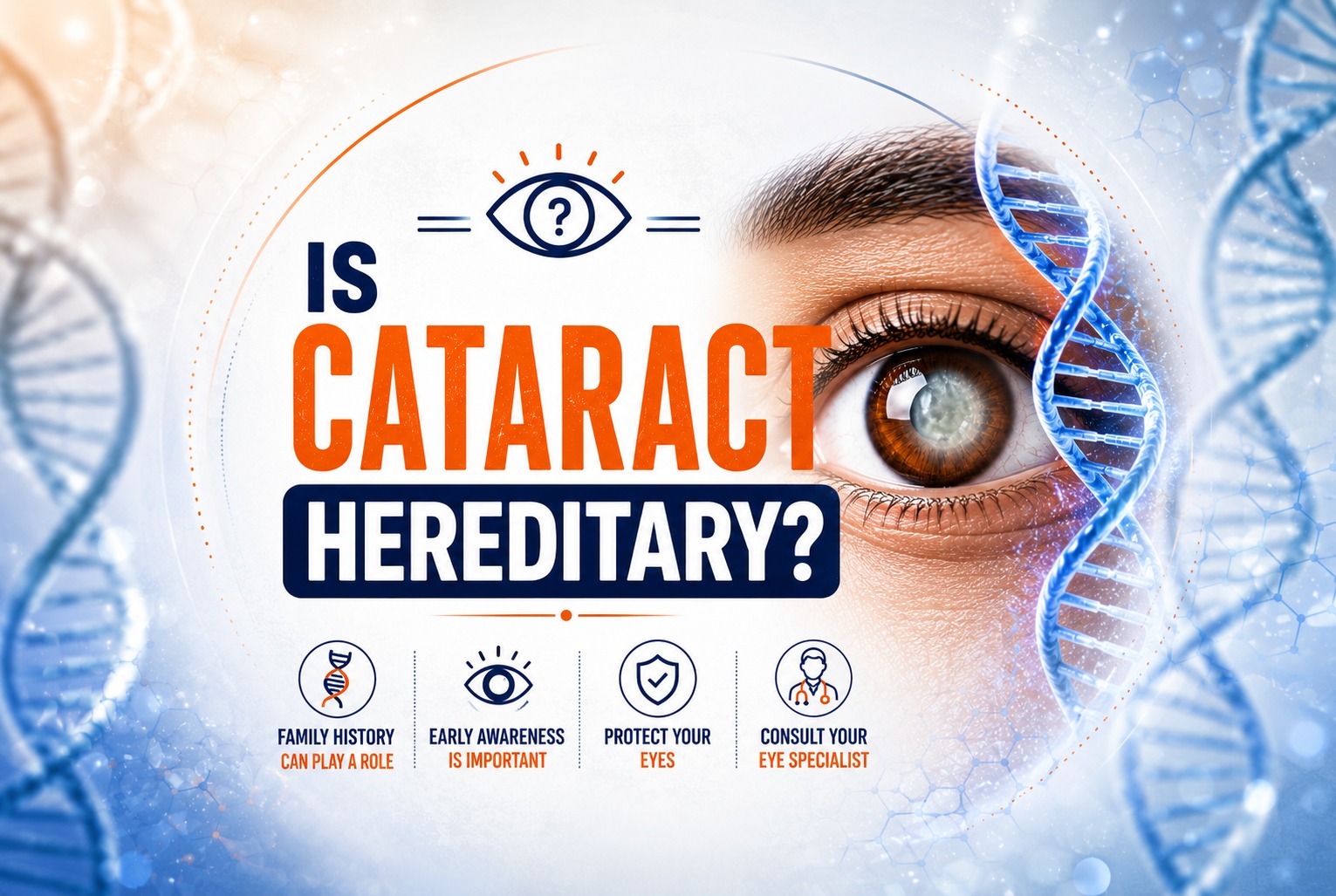
Cataracts are one of the leading causes of vision impairment worldwide and affect millions of people every year. Most people associate cataracts with aging, but many are surprised to learn that genetics can also play a significant role in their development.
A common question patients ask is: “If my parents had cataracts, will I get them too?”
The answer is not always straightforward. While having a family history of cataracts can increase your risk, genetics is only one part of the picture. Age, lifestyle choices, medical conditions, medications, and environmental factors can all contribute to cataract formation.
Understanding how hereditary and non-hereditary factors work together can help you take proactive steps to maintain healthy vision and seek timely treatment when needed.
In this article, we explore whether cataracts are hereditary, how family history influences risk, and what you can do to protect your eyesight.
What Is a Cataract?
A cataract occurs when the natural lens inside the eye becomes cloudy. The lens normally helps focus light onto the retina, allowing clear vision.
When the lens becomes cloudy:
- Vision becomes blurred
- Colors may appear faded
- Night vision becomes difficult
- Glare sensitivity increases
- Reading may become challenging
Cataracts usually develop gradually and may affect one or both eyes.
How Does the Eye Lens Become Cloudy?
The lens of the eye is made mostly of water and proteins arranged in a highly organized structure.
As we age:
- Lens proteins begin to break down
- Protein clumps form inside the lens
- Light scattering increases
- Transparency decreases
Over time, these changes lead to lens clouding and cataract formation.
Are Cataracts Hereditary?
The short answer is yes, cataracts can be hereditary, but not all cataracts are caused by genetics.
Research has shown that genetic factors influence an individual’s susceptibility to cataract development. Certain inherited traits may increase the likelihood of developing cataracts earlier in life or make someone more vulnerable to age-related cataracts.
If one or more close family members have had cataracts, your risk may be higher than someone without a family history.
However, having a family history does not guarantee that you will develop cataracts, and many people without any family history still develop them.
Understanding the Role of Genetics
Scientists have identified multiple genes involved in maintaining lens clarity.
These genes help regulate:
- Lens protein structure
- Cellular repair mechanisms
- Protection against oxidative damage
- Lens development and growth
Mutations or variations in these genes may increase the risk of cataract formation.
Some inherited genetic changes can cause cataracts to develop:
- At birth
- During childhood
- In early adulthood
- Earlier than expected with aging
What Are Congenital Cataracts?
Congenital cataracts are cataracts present at birth or that develop during infancy.
These cataracts are often associated with:
- Genetic mutations
- Inherited conditions
- Developmental abnormalities
Congenital cataracts may affect one or both eyes and require early diagnosis to prevent permanent vision problems.
Symptoms of Congenital Cataracts
Parents may notice:
- White or gray pupil
- Poor eye contact
- Wandering eye movements
- Difficulty tracking objects
- Delayed visual development
Prompt evaluation by a pediatric ophthalmologist is essential.
Family History and Age-Related Cataracts
The most common cataracts are age-related cataracts.
Studies suggest that genetics may account for a significant portion of an individual’s risk of developing age-related cataracts.
If your parents or siblings developed cataracts, you may:
- Develop cataracts earlier
- Have a greater likelihood of requiring surgery
- Experience faster cataract progression
However, lifestyle and environmental factors still play a major role.
Other Major Risk Factors for Cataracts
Even if cataracts run in your family, several non-genetic factors can influence whether and when they develop.
1. Aging
Age remains the most important risk factor.
Most cataracts occur after age 60, although changes in the lens often begin much earlier.
As the lens ages:
- Proteins break down
- Oxidative damage accumulates
- Lens transparency decrease
2. Diabetes
People with diabetes have a significantly higher risk of cataracts.
High blood sugar levels can:
- Damage lens proteins
- Increase lens swelling
- Accelerate cataract formation
Diabetic patients often develop cataracts at a younger age.
3. Excessive Sunlight Exposure
Long-term exposure to ultraviolet (UV) radiation may increase cataract risk.
UV rays can damage lens proteins and contribute to oxidative stress.
Protection Tips
- Wear UV-protective sunglasses
- Use wide-brimmed hats outdoors
- Avoid prolonged sun exposure during peak hours
4. Smoking
Smoking is one of the most preventable cataract risk factors.
Tobacco smoke contains harmful chemicals that:
- Increase oxidative damage
- Reduce antioxidant levels
- Accelerate lens aging
Research consistently shows higher cataract rates among smokers.
5. Excessive Alcohol Consumption
Heavy alcohol intake may contribute to cataract development through oxidative stress and nutritional deficiencies.
Moderation is important for overall eye health.
6. Long-Term Steroid Use
Prolonged use of corticosteroids can increase the risk of certain cataracts.
Steroids may be prescribed for:
- Asthma
- Arthritis
- Autoimmune diseases
- Skin disorders
Patients using long-term steroids should undergo regular eye examinations.
7. Eye Injuries
Trauma to the eye can cause cataracts immediately or years after an injury.
Examples include:
- Sports injuries
- Workplace accidents
- Penetrating eye injuries
Protective eyewear can help reduce this risk.
8. Previous Eye Surgery
Certain eye procedures may slightly increase the likelihood of cataract formation later in life.
Regular follow-up care helps monitor lens health.
Types of Cataracts
Understanding the different types of cataracts can help patients recognize symptoms earlier.
Nuclear Cataracts
These develop in the center of the lens.
Common symptoms include:
- Gradual vision blur
- Difficulty seeing distant objects
- Yellowing of vision
Cortical Cataracts
These begin around the edges of the lens.
Symptoms may include:
- Glare sensitivity
- Light scatter
- Difficulty driving at night
Posterior Subcapsular Cataracts
These form at the back of the lens.
Patients often notice:
- Reading difficulties
- Increased glare
- Rapid vision decline
This type is more common in diabetics and steroid users.
Can Cataracts Be Prevented?
Understanding the different types of cataracts can help patients recognize symptoms earlier.
Nuclear Cataracts
These develop in the center of the lens.
Common symptoms include:
- Gradual vision blur
- Difficulty seeing distant objects
- Yellowing of vision
Cortical Cataracts
These begin around the edges of the lens.
Symptoms may include:
- Glare sensitivity
- Light scatter
- Difficulty driving at night
Posterior Subcapsular Cataracts
These form at the back of the lens.
Patients often notice:
- Reading difficulties
- Increased glare
- Rapid vision decline
This type is more common in diabetics and steroid users.
When Is Cataract Surgery Needed?
Not all cataracts require immediate surgery.
Surgery is generally recommended when cataracts begin interfering with daily activities such as:
- Reading
- Driving
- Watching television
- Working
- Recognizing faces
Modern cataract surgery is one of the safest and most successful procedures in medicine.
Is Cataract Surgery Permanent?
Yes.
During surgery:
- The cloudy natural lens is removed
- A clear artificial intraocular lens (IOL) is implanted
The cataract cannot return because the natural lens has been replaced.
Patients often experience significant improvement in vision following surgery.
Frequently Asked Questions
If my parents had cataracts, would I definitely get them?
No. Family history increases risk but does not guarantee cataract development.
Can young adults develop cataracts?
Yes. Genetics, diabetes, trauma, medications, and other factors can cause cataracts at a younger age.
Are cataracts preventable?
Not entirely, but healthy lifestyle choices may delay their onset and progression.
Is cataract surgery safe?
Modern cataract surgery has a very high success rate and is considered extremely safe.
Can cataracts cause blindness?
Untreated advanced cataracts can lead to severe vision impairment, but timely surgery can restore vision in most cases.
Conclusion
While aging remains the primary cause of cataracts, genetics and family history can significantly influence who develops them and when. If close family members have had cataracts, it’s important to remain proactive about your eye health.
Regular eye examinations, UV protection, healthy lifestyle habits, diabetes control, and avoiding smoking can help reduce risk and support long-term vision.
Early detection allows timely treatment and better visual outcomes, ensuring that cataracts do not interfere with your quality of life.
About Anushka Eye Hospital
At Anushka Super Specialty Eye Hospital, Bhiwandi, we offer comprehensive cataract evaluation, advanced diagnostic testing, premium intraocular lens options, and modern micro-incision cataract surgery performed by experienced eye specialists.
With more than 30,000+ successful cataract surgeries, our team is committed to helping patients achieve clearer vision and improved quality of life.
Book your cataract screening today and take the first step toward better vision.