Fungal Keratitis During Monsoon: Risk Factors and Warning Signs
anushka
5 September 2026
Eye Health
The monsoon season increases moisture and humidity in the environment. While rain itself does not directly cause fungal keratitis, certain environmental exposures during this season can increase the risk of fungal eye infections.
One serious condition to be aware of is fungal keratitis, an infection of the cornea caused by fungi.
What Is Fungal Keratitis?
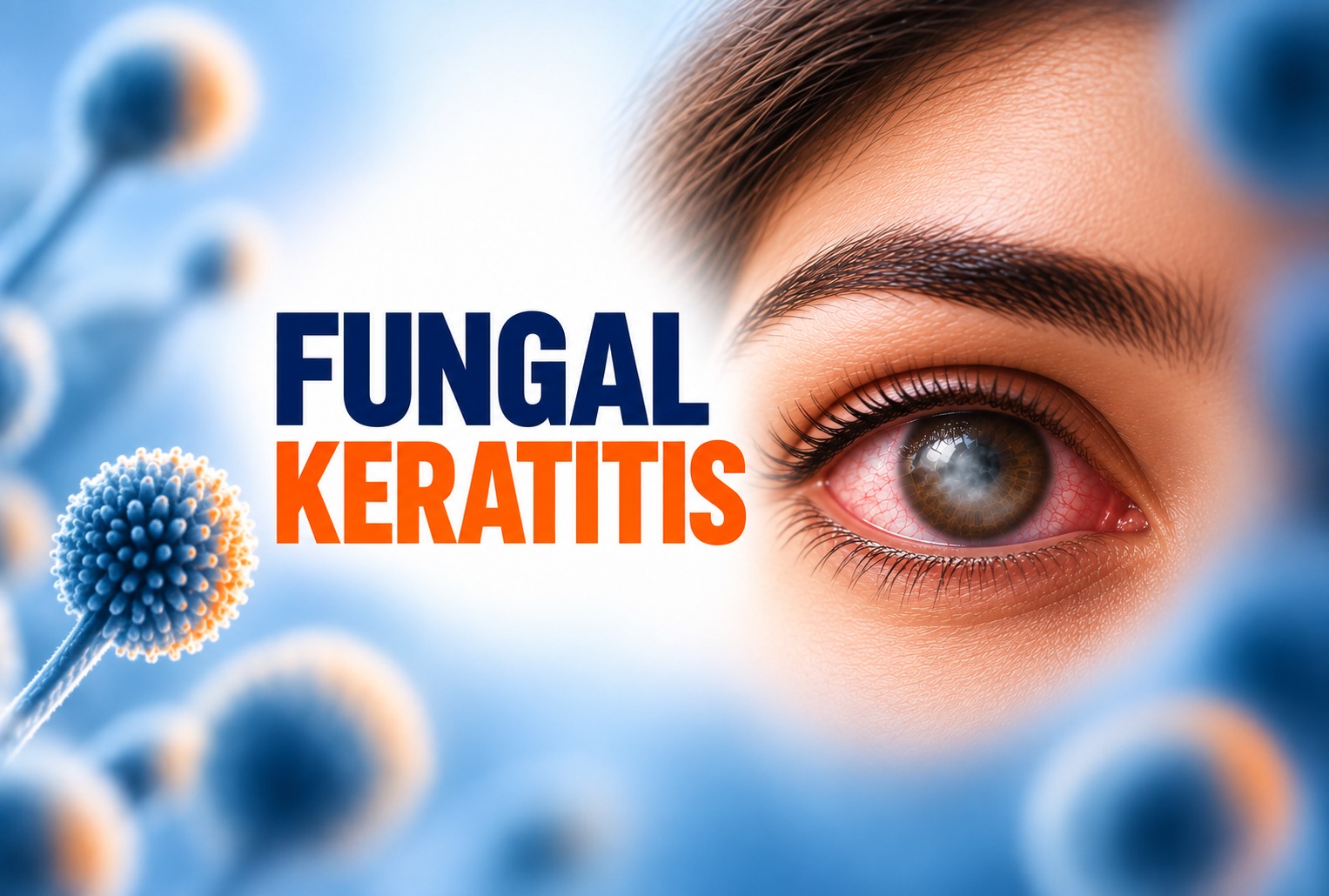
Fungal keratitis is a fungal infection involving the cornea.
It can damage the corneal tissue and may threaten vision if diagnosis and treatment are delayed.
How Can It Occur?
One important risk factor is an injury to the eye involving plant or organic material.
For example, agricultural workers or people working outdoors may sustain a small corneal injury from: • Leaves • Branches • Plant material • Soil • Agricultural debris
A seemingly minor injury can sometimes provide an opportunity for fungi to infect the cornea.
Other risk factors can include contact-lens problems, ocular surface disease, previous eye surgery and certain conditions that weaken the eye’s defenses.
Warning Signs
Symptoms can include: • Increasing eye redness • Eye pain or discomfort • Excessive watering • Light sensitivity • Blurred vision • Foreign-body sensation • Eye discharge • A white or grey lesion on the cornea
Symptoms may initially appear mild but can progress.
Why Should You Not Ignore It?
The cornea is responsible for a significant part of the eye’s focusing power.
An infection can cause corneal inflammation and scarring. If the infection becomes severe, it may result in substantial vision loss and can require intensive treatment or, in some cases, surgical intervention.
What Should You Do After an Eye Injury?
If soil, plant material or another foreign object enters the eye: 1. Do not rub the eye. 2. Avoid attempting to remove an embedded object yourself. 3. If appropriate, gently rinse the eye with clean water or sterile saline. 4. Avoid using leftover or borrowed eye drops. 5. Arrange an eye examination if symptoms persist or if the injury was significant.
If pain, redness or blurred vision develops after an injury, seek ophthalmic evaluation promptly.
Contact Lens Wearers Need Extra Care
Poor contact-lens hygiene can increase the risk of corneal infections.
Always: • Wash your hands before handling lenses. • Use the recommended lens-care solution. • Follow the replacement schedule. • Avoid sleeping in lenses unless specifically prescribed. • Avoid swimming or exposing lenses to untreated water.
If a contact-lens wearer develops pain, redness or reduced vision, the lenses should be removed and prompt professional evaluation should be sought.
Don't Self-Medicate
Not every corneal infection is fungal, and different infections require different treatments.
Using inappropriate medication—especially steroid-containing eye drops without medical supervision—can potentially worsen certain infections.
A proper examination is therefore important before starting treatment.
When Should You See an Ophthalmologist?
Seek prompt medical attention if you develop:
• Eye pain after an injury • Increasing redness • Blurred or decreasing vision • Significant light sensitivity • Persistent watering • A white spot on the cornea • Symptoms after exposure to soil or plant material
Final Message
Fungal keratitis is an uncommon but potentially serious eye infection. During monsoon, people who work with plants, soil or agricultural material should take extra precautions to protect their eyes from injury.
Never ignore persistent eye pain, redness or reduced vision—especially after an eye injury. Early examination can make an important difference in protecting vision.