Diwali Air Pollution and Your Eyes: Symptoms, Risks and Prevention Tips
anushka
6 November 2026
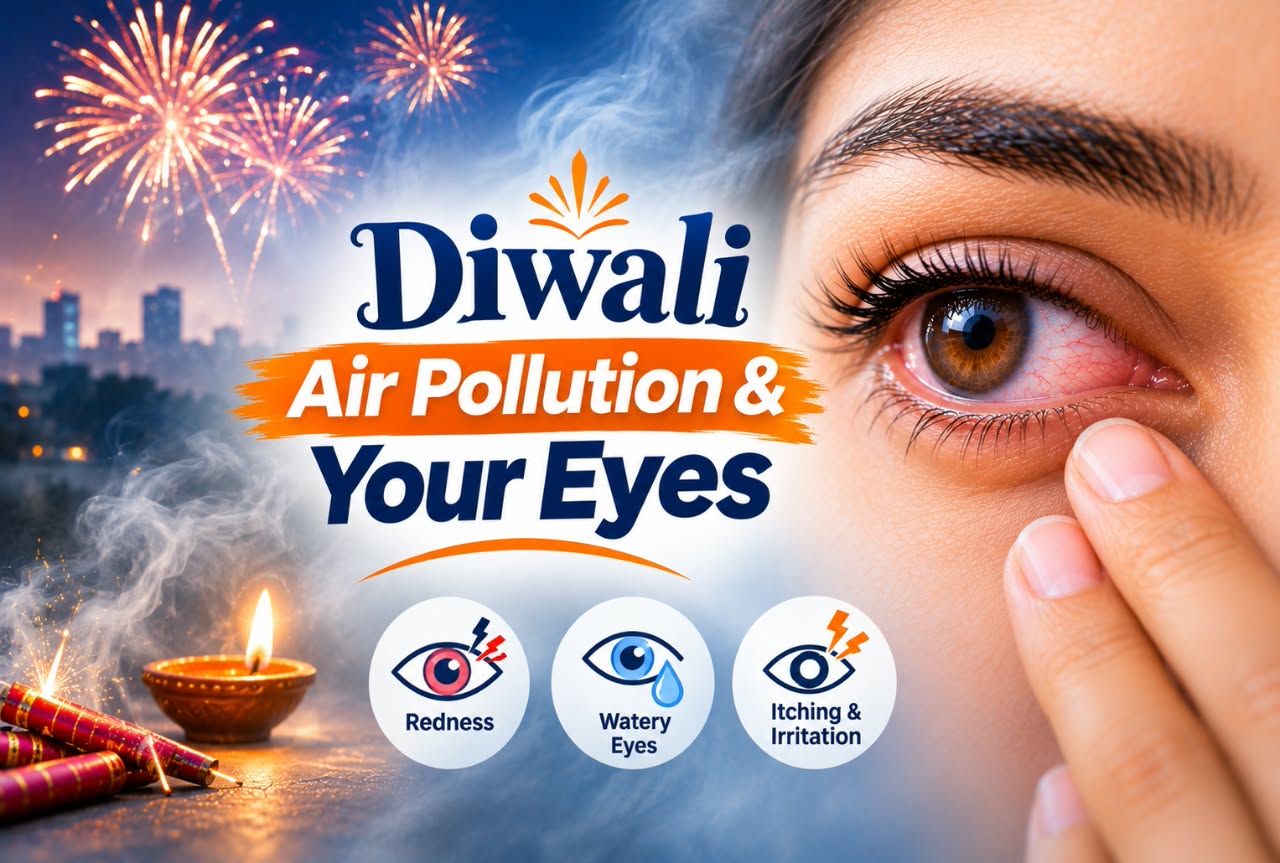
Every year, as the festival lights come on, the air in many Indian cities turns hazy. Fireworks, vehicle exhaust, cooler weather and still air combine to push pollution levels up, and many people notice the same thing within hours: burning, watery, red, itchy eyes.
For most people this irritation is uncomfortable but temporary. For others, especially people with dry eyes, allergies or contact lens use, it can become a real problem. And sometimes, symptoms blamed on “just pollution” turn out to be something more serious.
This guide explains how Diwali air pollution affects your eyes, how to recognise common symptoms, what you can safely do at home, how to protect your eyes before and during the festival, and when to see an eye doctor.
Key takeaways
- Smoke and fine particles can irritate the surface of the eye, causing burning, redness, watering, itching and a gritty feeling.
- People with dry eye, allergic conjunctivitis or who wear contact lenses are often affected more.
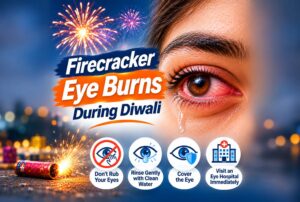
- Do not rub your eyes. Rubbing can turn irritation into a corneal scratch.
- Gentle rinsing, lubricating drops and reducing smoke exposure help mild symptoms.
- Severe pain, reduced vision, strong light sensitivity or symptoms that persist beyond a day or two need an eye examination.
How does Diwali air pollution affect your eyes?
The front surface of your eye is directly exposed to the air. It is protected by a thin tear film that keeps the surface moist, washes away dust and helps you see clearly. Polluted air can disturb this protective layer in several ways:
- Fine particles. Tiny particles from smoke and combustion land on the eye surface and the inside of the eyelids, acting as irritants.
- Gases and chemical residue. Firework smoke contains gases and residues that can sting the eyes and inflame the eyelid margins and the conjunctiva (the clear membrane over the white of the eye).
- Tear film disruption. Smoke and dry, cool air can make tears evaporate faster, leaving the surface dry and more sensitive.
- Allergic response. Dust, smoke and particulates can trigger or worsen allergic eye symptoms such as itching and swelling.
- Reflex rubbing. Irritated eyes make us rub them, which can scratch the cornea and introduce germs from the hands.
Pollution also tends to linger in the evening and early morning, when many people are outdoors for celebrations, travel or morning walks.
Common symptoms of pollution-related eye irritation
- Burning or stinging sensation
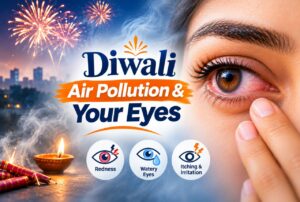
- Redness of the eyes
- Watering or, in some people, a sudden feeling of dryness
- Itching
- A gritty or “sand in the eye” feeling
- Mild swelling or puffiness of the eyelids
- Temporary blurring that clears with blinking or lubricating drops
- Mild sensitivity to bright light
These symptoms often settle once you move away from the smoke and rest your eyes. If they do not, or if they come with the warning signs described below, see an eye doctor.
Pollution irritation or something more serious?
It is easy to blame every eye symptom on smoke. This table can help you tell the difference between common irritation and symptoms that need medical attention.
Symptom | More likely smoke / pollution irritation | See an eye doctor promptly if… |
Redness | Mild, both eyes, improves after leaving the smoke | One eye is very red, or redness is getting worse |
Pain | Mild burning or stinging that eases | Severe, deep or persistent pain |
Vision | Brief blur that clears with blinking | Blur that does not clear, or any drop in vision |
Light sensitivity | Slight discomfort in bright light | Marked sensitivity to light |
Discharge | Clear watering | Sticky, yellow or green discharge |
Feeling in the eye | Gritty, itchy feeling | Feeling that something is stuck that does not go away |
Duration | Settles in hours to a day | Continues beyond 1 to 2 days |
Who is more likely to be affected?
- People with dry eye disease. Their tear film is already unstable, so smoke and dry air can make symptoms flare quickly.
- People with allergic conjunctivitis or hay fever. Particles can trigger itching, redness and swelling.
- Contact lens wearers. Particles can stick to lenses and cause discomfort, redness and a higher risk of irritation or infection.
- Children and older adults. Children rub their eyes often; older adults are more prone to dryness.
- People with asthma or other respiratory conditions, who may be more sensitive to polluted air in general.
- People who have had recent eye surgery or an eye infection, whose eyes are healing and more sensitive.
Safe home relief for mild irritation
- Move away from the smoke. Go indoors or to cleaner air and close the windows.
- Stop rubbing. Even if the itch is intense, rubbing can make irritation worse and may scratch the cornea.
- Rinse gently. Use clean water or sterile saline to flush the eyes, and wash your face and hands.
- Use preservative-free lubricating (artificial tear) drops. These replace and refresh the tear film. Use them as directed on the label.
- Apply a cool, clean compress over closed lids for a few minutes if the eyelids feel swollen or sore.
- Take out your contact lenses and switch to glasses until the eyes feel normal again.
- Rest your eyes. Reduce screen time and take regular blinking breaks.
Avoid these common mistakes
- Do not use leftover prescription drops, steroid drops or “redness-relief” drops unless an eye doctor has advised them.
- Do not put home remedies in the eye, such as rose water, honey, milk, kajal or herbal juices.
- Do not share eye drops, towels or make-up with others.
- Do not keep wearing contact lenses if your eyes hurt, are red or are producing discharge.
How to protect your eyes before and during Diwali
At home
- Check the local air quality index (AQI) and plan outdoor time around the cleaner hours of the day.
- Keep windows closed during peak firework hours and consider running an air purifier with a HEPA filter in the room where you spend most time.
- Keep a bottle of preservative-free lubricating drops in the house if you are prone to dry or allergic eyes.
- Stay hydrated, and take regular breaks from screens to blink fully.
When you go outside
- Wear wraparound glasses or sunglasses to reduce the amount of particles reaching the eyes. They do not replace protective eyewear if you are near fireworks.
- A well-fitting N95 mask protects your nose and mouth but does not seal the eyes, so combine it with glasses.
- Keep a safe distance from fireworks and stay upwind of smoke.
- On return home, wash your face and hands and rinse your eyes gently.
If you wear contact lenses
- Consider wearing glasses on days of heavy smoke.
- Wash and dry your hands before handling lenses, and never sleep in lenses not approved for overnight wear.
- Use fresh solution every time, and replace lenses on schedule.
- Remove lenses at the first sign of redness, pain or discharge and see an eye doctor if symptoms continue.
When to see an eye doctor
Get an eye examination if any of these happen:
- Eye pain that is severe or does not ease
- Any decrease in vision or blur that does not clear
- Marked sensitivity to light
- Increasing redness, swelling or sticky yellow or green discharge
- Symptoms that continue for more than one to two days despite home care
- Irritation in a contact lens wearer that does not settle quickly after removing the lenses
- Any history of a blast, spark, burn or something hitting the eye. This is an injury, not pollution, and needs urgent care.
A chemical splash is an emergency. Flush the eye continuously with plenty of clean, lukewarm running water or saline for at least 20 minutes while arranging urgent medical care.
Common myths about Diwali smoke and eyes
Myth | Fact |
“Washing my eyes many times with tap water cures everything.” | Gentle rinsing helps remove irritants, but over-washing can strip the tear film. Persistent symptoms need medical advice. |
“Red-eye drops from the chemist are safe for everyone.” | Some drops mask symptoms or contain ingredients that are not suitable without advice. Use only what a doctor recommends. |
“Sunglasses give full protection near fireworks.” | Ordinary sunglasses are not impact-rated and do not protect against blast debris. |
“If the pain is mild, there is no need to see a doctor.” | Some serious injuries and infections start mildly. If symptoms persist or vision changes, get examined. |
Frequently asked questions
How long do eyes stay irritated after exposure to firework smoke?
Mild irritation usually settles within hours to a day once you are away from the smoke. If symptoms continue for more than a couple of days, get your eyes checked.
Can air pollution cause conjunctivitis?
Pollutants can irritate or inflame the conjunctiva, and can worsen allergic conjunctivitis. Infectious conjunctivitis is caused by germs, but rubbing irritated eyes can make infection more likely. An eye doctor can tell you which type you have.
Are eye drops safe to use during Diwali?
Preservative-free lubricating drops are generally suitable for soothing irritation. Medicated drops, especially steroid drops, should only be used under the guidance of an eye doctor.
Should I wear contact lenses during Diwali?
On days with heavy smoke, glasses are a more comfortable choice. If you do wear lenses, follow strict hygiene and remove them at the first sign of discomfort.
Can children get eye problems from Diwali smoke?
Yes. Children often rub their eyes and play outdoors near fireworks. Keep them at a safe distance, supervise them closely and take them to an eye doctor if symptoms persist.
Conclusion
Diwali air pollution can leave eyes red, watery and uncomfortable, but a few simple steps make a big difference: limit smoke exposure, avoid rubbing, use safe lubricating drops, take extra care with contact lenses and know the warning signs that need an examination.
If your symptoms do not settle quickly, or if you notice pain, reduced vision or discharge, do not wait. An early eye check-up protects your vision long after the festival lights have faded.
Book an eye check-up today if your eyes have been irritated for more than a day or two.