Laser Cataract Surgery: Price, Lens Types and Recovery
anushka
14 October 2026
Cataract is one of the most common causes of vision impairment, particularly with increasing age. A cataract occurs when the natural lens of the eye becomes cloudy, preventing light from passing clearly to the retina. Patients may experience blurred vision, glare, difficulty seeing at night, faded colours, frequent changes in spectacle power and difficulty performing everyday activities.
Fortunately, modern cataract surgery is highly advanced and can restore useful vision in most suitable patients. Today, patients may hear terms such as laser cataract surgery, femtosecond laser-assisted cataract surgery, robotic cataract surgery, premium IOLs and bladeless cataract surgery. Understanding these terms can help patients make informed decisions about their treatment.
What Is Laser Cataract Surgery?
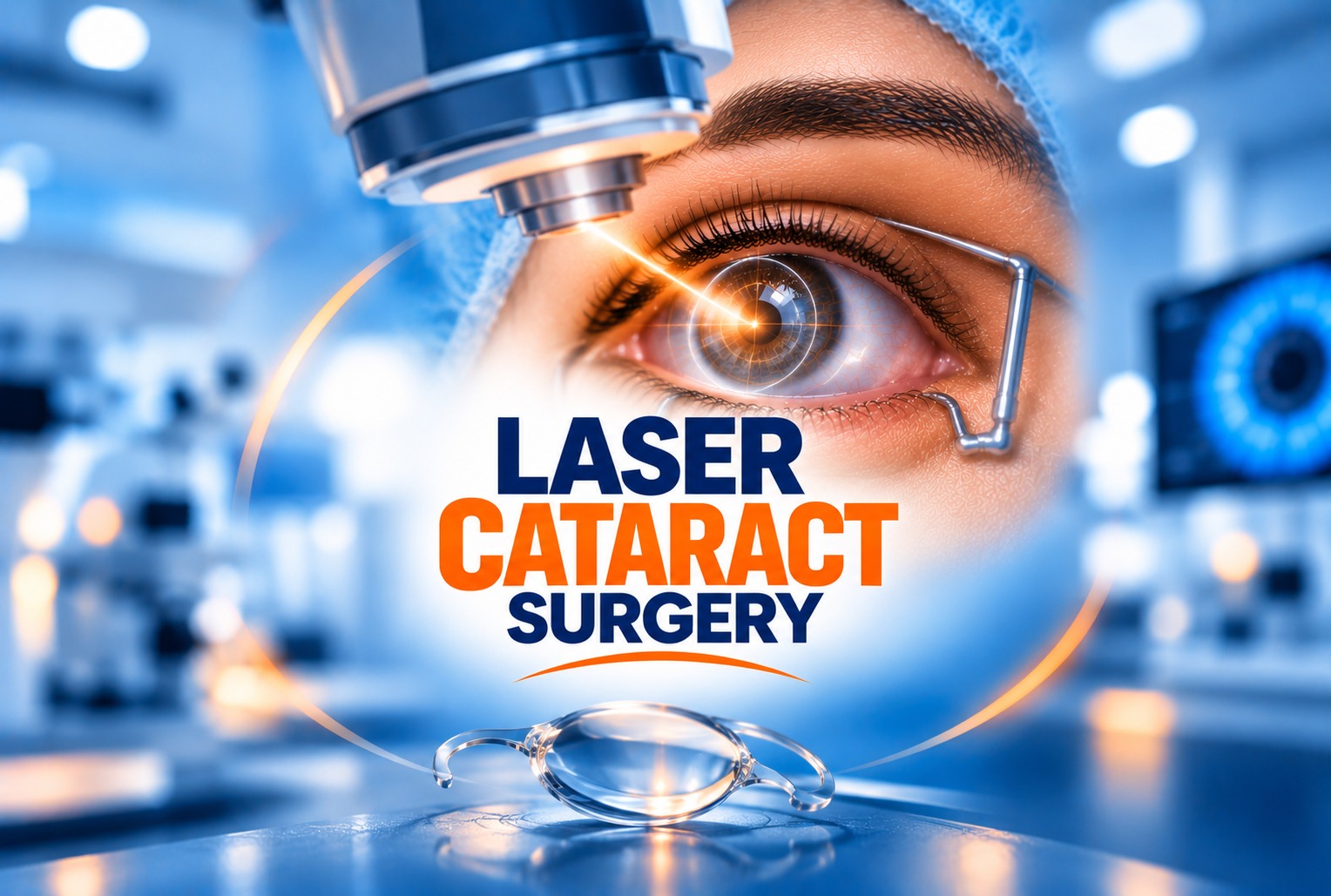
Laser-assisted cataract surgery uses a femtosecond laser to perform or assist with certain steps of cataract surgery.
In conventional phacoemulsification cataract surgery, the surgeon makes very small incisions and uses an ultrasound device to break the cloudy natural lens into small pieces before removing it. In laser-assisted cataract surgery, a femtosecond laser may be used for selected steps such as creating corneal incisions, making a precise opening in the lens capsule and fragmenting the cataract.
The laser does not independently perform the entire operation. The ophthalmic surgeon remains responsible for planning, controlling and completing the procedure.
Laser technology can provide a high level of precision, but it is not automatically necessary for every cataract patient. Conventional phacoemulsification remains a highly established and effective cataract procedure.
What Is the "Range" of Cataract Surgery Options?
Patients undergoing cataract surgery may have several choices depending on their eye condition, lifestyle and available technology.
At one end, there are standard cataract procedures using a monofocal IOL. At the other end are advanced procedures involving premium IOLs, astigmatism correction and customized technologies.
The appropriate choice depends on factors such as:
- Cataract density.
- Corneal astigmatism.
- Retinal health.
- Glaucoma or other eye disease.
- Lifestyle and occupation.
- Night-driving requirements.
- Dependence on spectacles.
- Patient expectations.
The most technologically advanced option is not automatically the best option for every patient.
Free Cataract Surgery: What Does It Usually Mean?
Eligible patients may receive cataract surgery through government-supported schemes, insurance programmes or charitable eye-care initiatives.
Depending on the scheme and hospital, the package may cover the surgical procedure, hospital services and an approved intraocular lens. The exact benefits vary according to eligibility and package rules.
Patients should understand that “free cataract surgery” does not necessarily mean that every available lens or technology is included.
Possible Limitations of Free Cataract Surgery
One limitation may be the choice of IOL. Government or insurance packages may provide specific approved lenses, while premium multifocal, EDOF or toric lenses may not always be included.
Another limitation may be the choice of technology. A patient may not necessarily be able to select a particular laser platform or premium surgical technology under a fixed package.
There may also be restrictions regarding hospital selection, because treatment may need to be performed at an empanelled facility.
In some cases, services outside the approved package, such as certain additional investigations, spectacles, medicines or premium upgrades, may involve separate expenses. Patients should confirm this with the hospital before surgery.
These are limitations of the funding arrangement and do not mean that free cataract surgery is ineffective.
For many patients, especially those who might otherwise delay surgery because of financial limitations, scheme-based cataract surgery can provide an important opportunity to restore vision.
Types of Intraocular Lenses
The natural cloudy lens is replaced with an artificial lens called an intraocular lens, or IOL.
Monofocal IOL
A monofocal lens is designed to provide clear vision at one primary distance, usually distance vision.
Patients may still require spectacles for reading, mobile-phone use or other near activities.
Toric IOL
A toric IOL is designed to correct significant corneal astigmatism.
In appropriately selected patients, it may reduce dependence on spectacles for distance vision.
Multifocal IOL
Multifocal lenses are designed to provide vision at multiple distances.
They can reduce dependence on spectacles for distance, intermediate and near activities. However, some patients may experience glare, halos or reduced contrast, particularly in low-light conditions.
EDOF IOL
Extended Depth of Focus, or EDOF, lenses are designed to provide an extended range of vision, particularly distance and intermediate vision.
Some patients may still require reading glasses for small print or prolonged near work.
The appropriate IOL depends on the patient’s individual eye health and visual requirements rather than price alone.
Cataract Surgery Recovery
Cataract surgery is usually performed as a day-care procedure.
Vision may be blurred immediately after surgery. Many patients notice improvement within the first few days, although complete visual stabilisation can take longer.
Temporary symptoms may include:
- Mild redness.
- Foreign-body sensation.
- Mild irritation.
- Light sensitivity.
- Fluctuating vision.
Patients should use prescribed eye drops exactly as directed and attend scheduled follow-up examinations.
Rubbing or pressing the operated eye should be avoided. The surgeon will also advise when it is safe to resume exercise, swimming, driving and other activities.
Warning Signs After Surgery
Patients should contact their ophthalmologist promptly if they experience:
- Sudden reduction in vision.
- Severe or increasing eye pain.
- Increasing redness.
- Flashes of light.
- A curtain-like shadow.
- Sudden increase in floaters.
- Significant swelling.
- Rapidly worsening symptoms.
These symptoms should not be ignored.
Warning Signs After Surgery
Patients should contact their ophthalmologist promptly if they experience:
- Sudden reduction in vision.
- Severe or increasing eye pain.
- Increasing redness.
- Flashes of light.
- A curtain-like shadow.
- Sudden increase in floaters.
- Significant swelling.
- Rapidly worsening symptoms.
These symptoms should not be ignored.
Does Laser Cataract Surgery Guarantee Spectacle-Free Vision?
No.
Cataract surgery can significantly improve vision, but spectacle independence depends on the IOL, accuracy of measurements, healing and the health of the eye.
Even patients receiving advanced lenses may require spectacles for certain tasks.
Age-related presbyopia can also affect near vision later in life.
Final Thoughts
Laser-assisted cataract surgery is an important development in modern cataract care, but the decision should be based on the patient’s individual requirements rather than the word “laser” alone.
For patients undergoing free or government-supported cataract surgery, it is important to understand what the package includes, which IOL is available and whether any services fall outside the package.
A comprehensive eye examination, accurate biometry and detailed discussion with an ophthalmologist can help determine the most appropriate cataract treatment.